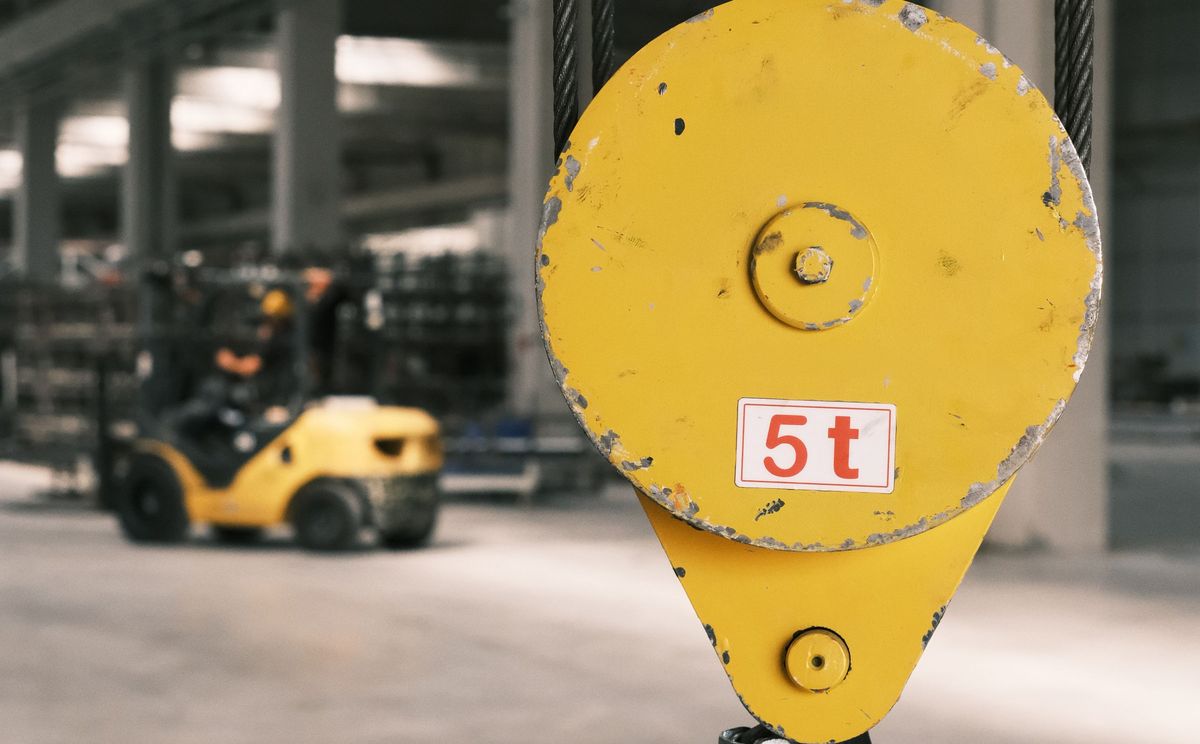
A shackle is rated by its maker, so the lug check does not rate it: it compares the lug load on the unfactored erection weight with the maker's working load limit, and checks that the shackle fits the lug. The fits are four: the pin passes the hole, the plate fits the jaw, the bow clears the top of the lug, and the load is within the limit. The pin and the hole then come back in the lug's own checks, in bearing and at the net section.
This post covers why the shackle sees a different load from the lug, and what each fit protects against.
Two loads: one for the shackle, one for the lug
The lift statics run twice. The lug, its welds and the shell are checked on W_L = K_L·W_E, with K_L the overall factor for impact and safety, 1.5 to 2.0 by Moss. The shackle is compared on W_E, unfactored. Its maker's design factor, 5:1 or 6:1, already carries impact. Factoring the load again for the shackle would count the same allowance twice.
For a tailing lug the load compared is the lug resultant. For a lifting lug it is the sling load including its spread, combined with the side load: √(sling² + lateral²).
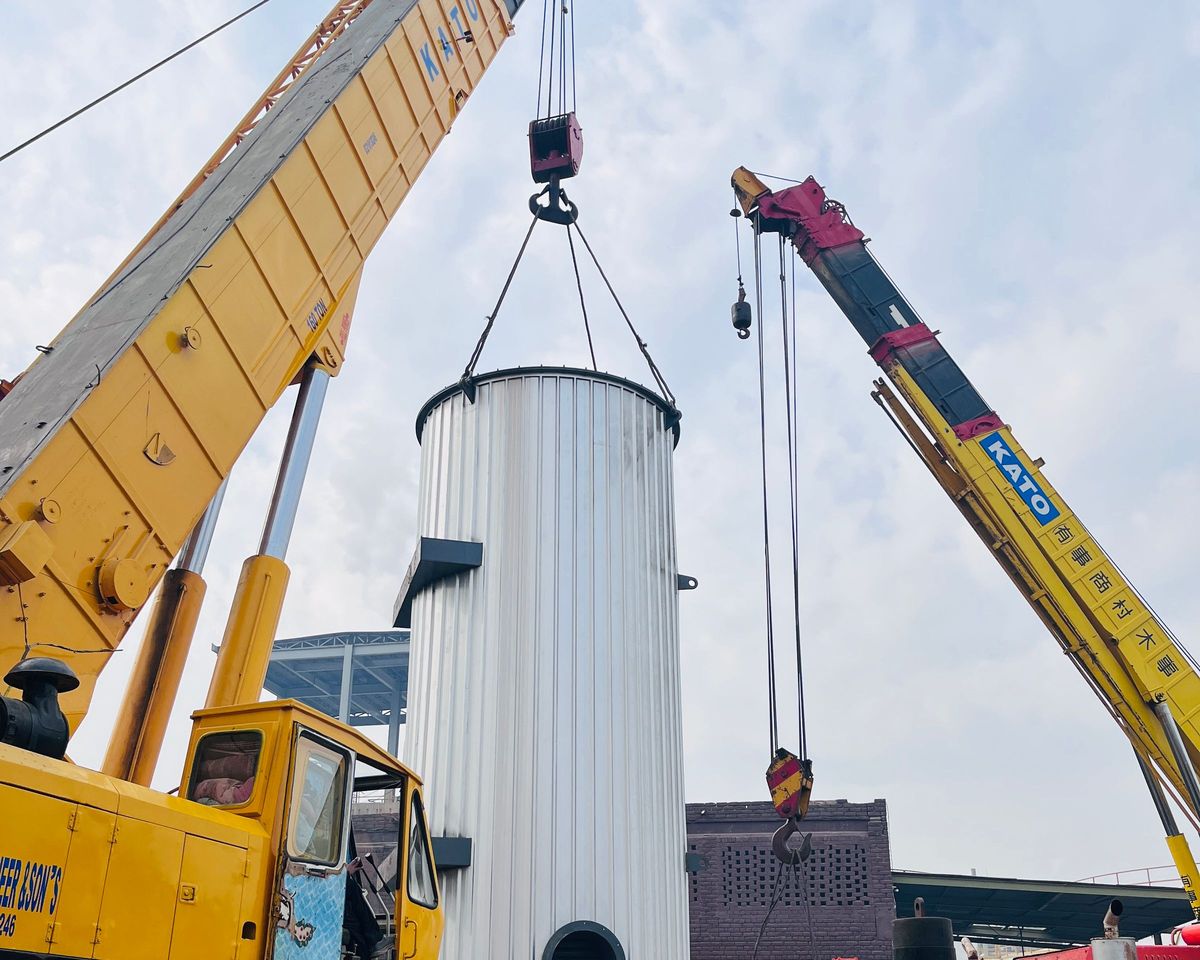
The lug load used is the largest over the lift's angle steps, since a lug's load changes as the vessel rises. In the default lift the tail lug is worst late in the lift, when the tail carries most of the weight, and the top lugs at the first pick. The shackle has to suit the worst step, not the step at which the lift starts.
The four fits
- Pin through the hole: D_pin ≤ D_hole. A pin that does not pass is the plain failure; a pin much smaller than the hole bears on a narrow strip of the hole and raises the bearing stress the lug check reads.
- Plate in the jaw: the lug plate with its cheek plates, t + 2·t_p, no wider than the jaw. A plate that is too thick cannot be rigged.
- Bow over the lug top: R − D_pin/2 no more than the inside length, the metal above the hole fitting inside the bow, with room left for the sling or hook.
- Load within the working load limit, on W_E.
Each fit is reported as a ratio, like a stress check, so the tightest one shows at a glance. A ratio near 1 on the pin means a close fit in the hole; a ratio near 1 on the jaw or the bow means the next size of plate or cheek plate will not go in.
The pin and the hole in the lug's own checks
Once the shackle is chosen, its pin diameter and the hole size feed the lug plate checks on W_L. The hole diameter D1 sets the net section beside the hole and the shear above it. The pin diameter D2 sets the bearing area.
- Net section: P / ((A − D1)·t) ≤ 0.45·F_y.
- Shear above the hole: P / ((R − D1/2)·t) ≤ 0.4·F_y.
- Bearing: P / (D2·t) ≤ 0.9·F_y.
This is where the shackle choice and the lug design meet. A larger shackle has a larger pin, which needs a larger hole, which takes metal from the section above it. In the example, shear above the hole already governs at 0.96. Cheek plates add to t at the hole, which lowers all three stresses without a wider lug, as long as the plate with its cheek plates still fits the jaw.
Where it stops
- 01The shackle is not rated here: its working load limit and design factor come from the maker.
- 02Side loading limits of the shackle itself are not checked; the maker's data sheet governs.
- 03There is no pin, sleeve or retaining-plate check for a trunnion's sling end.
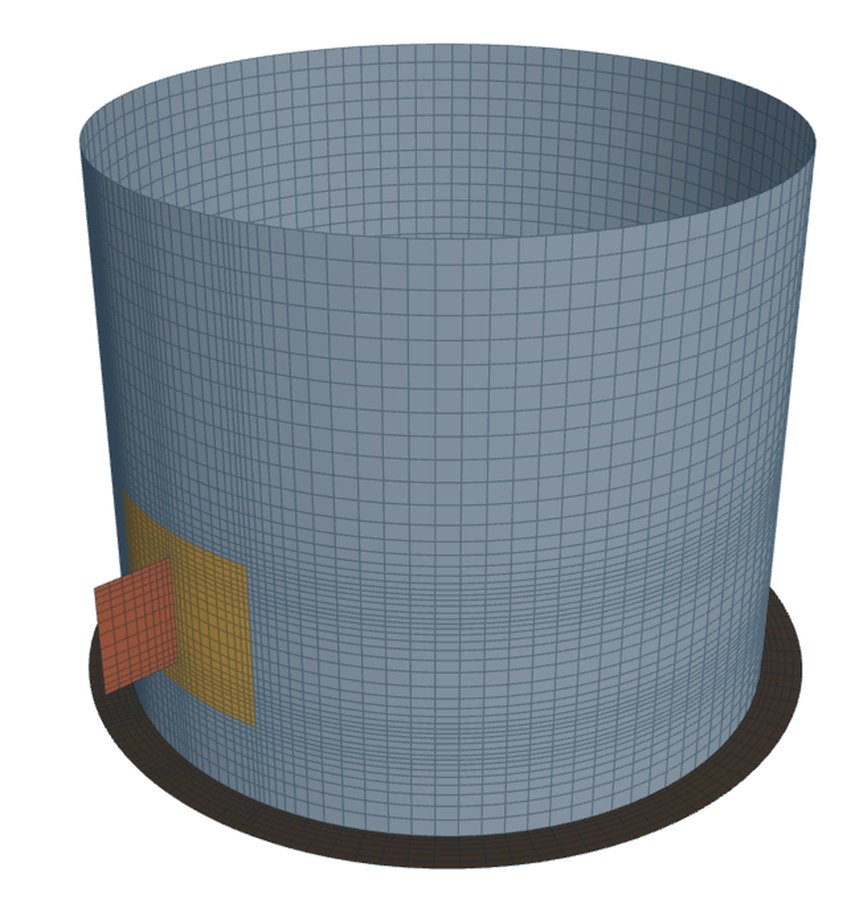
- 04The shell model under the lug is early access and under verification.
Try it in FEXLA
The Lifting and tailing lugs card checks the shackle's four fits and its working load limit, then the pin hole, bearing and welds of the lug.
Open the cardReferences
- ASME B30.26 (rigging hardware: rating and design factor with the manufacturer).
- D. R. Moss and M. Basic, Pressure Vessel Design Manual, 4th ed., 10-4 (lift loads and the factor K_L).
Method notes this draws on
Next post: A vessel on legs: the leg-to-shell check by WRC 537
Educational article. It explains principles and is not design guidance; follow your governing code and edition.